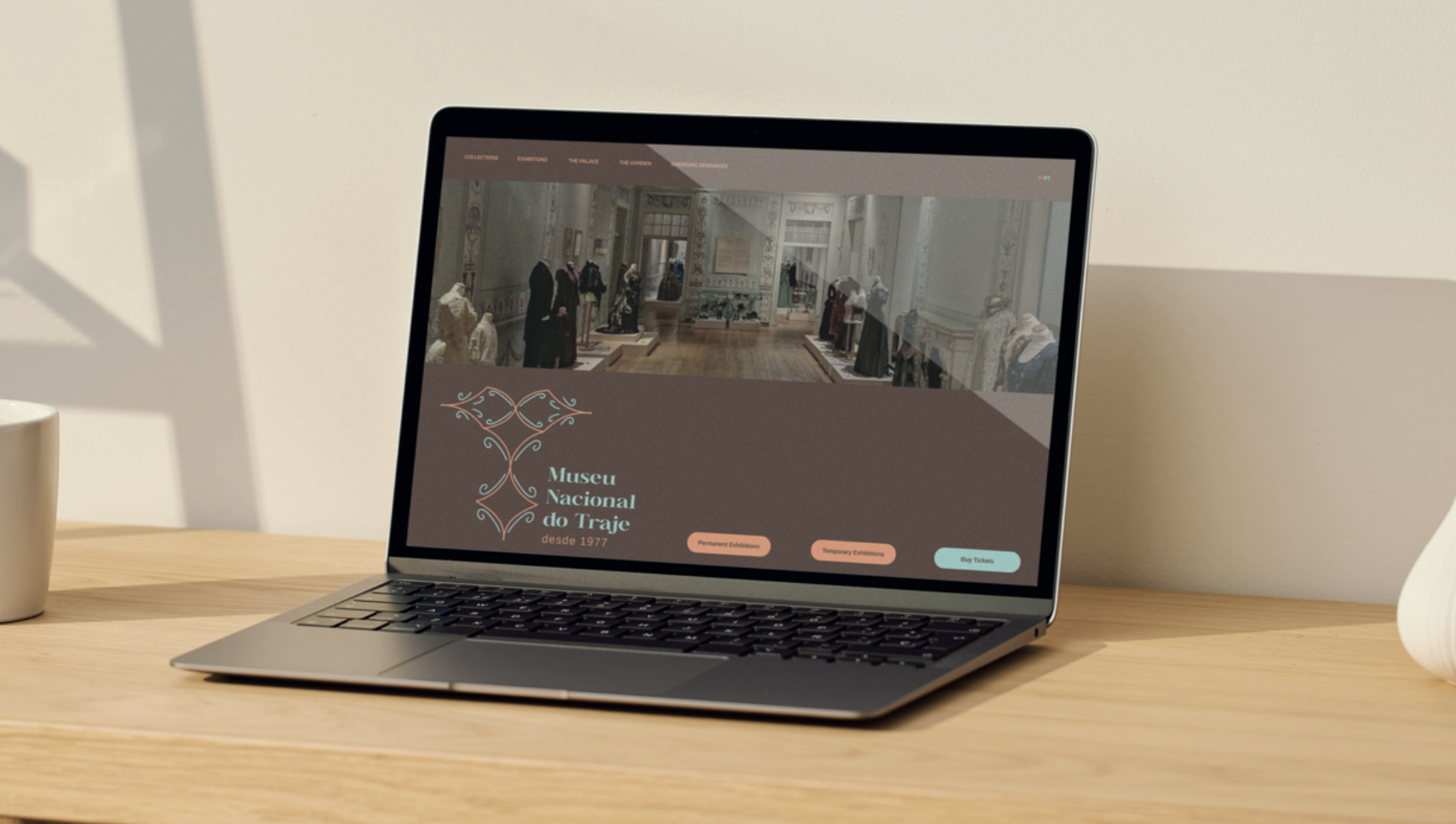
Museu Nacional do Traje
Institutional Rebranding, Visual Identity & Editorial Design
Project Overview
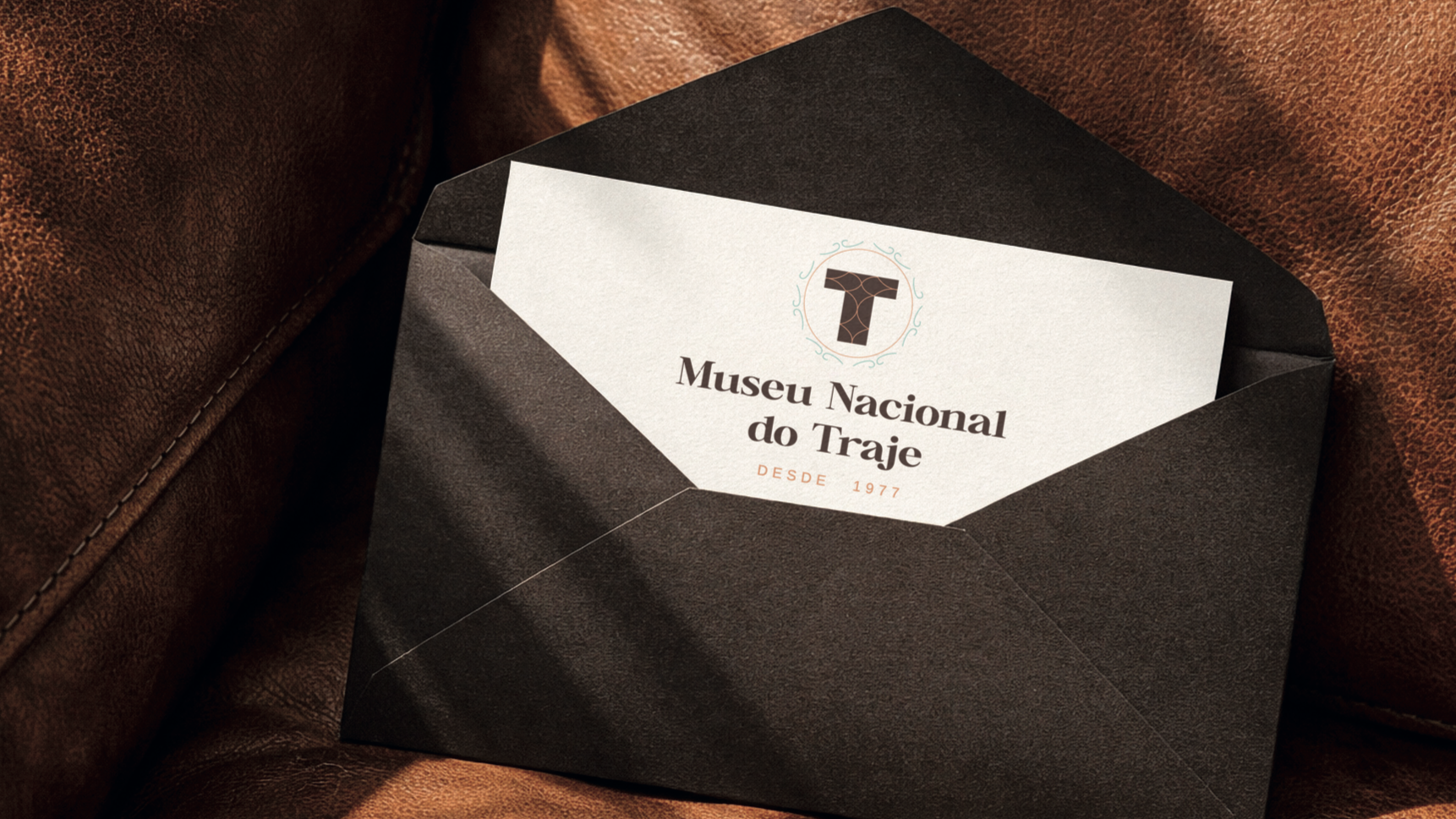
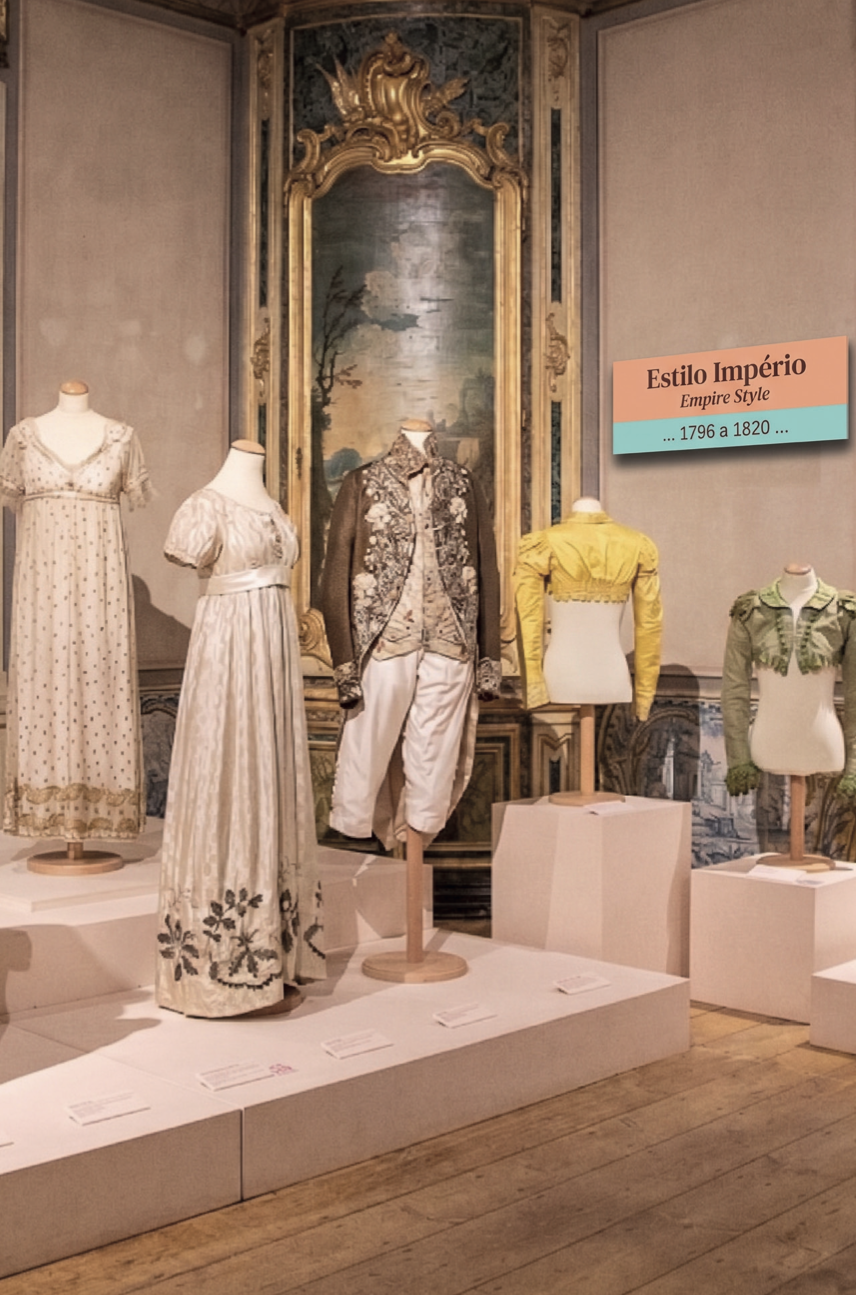
Established in 1977 inside the 18th-century Angeja-Palmela Palace, the Museu Nacional do Traje preserves an invaluable collection of over 45,000 textile pieces. This comprehensive rebranding shifts the institution from a static historical repository into a living, interconnected cultural ecosystem where ancestral textile craftsmanship directly inspires sustainable fashion futures.
01. Research & Museum Benchmarking
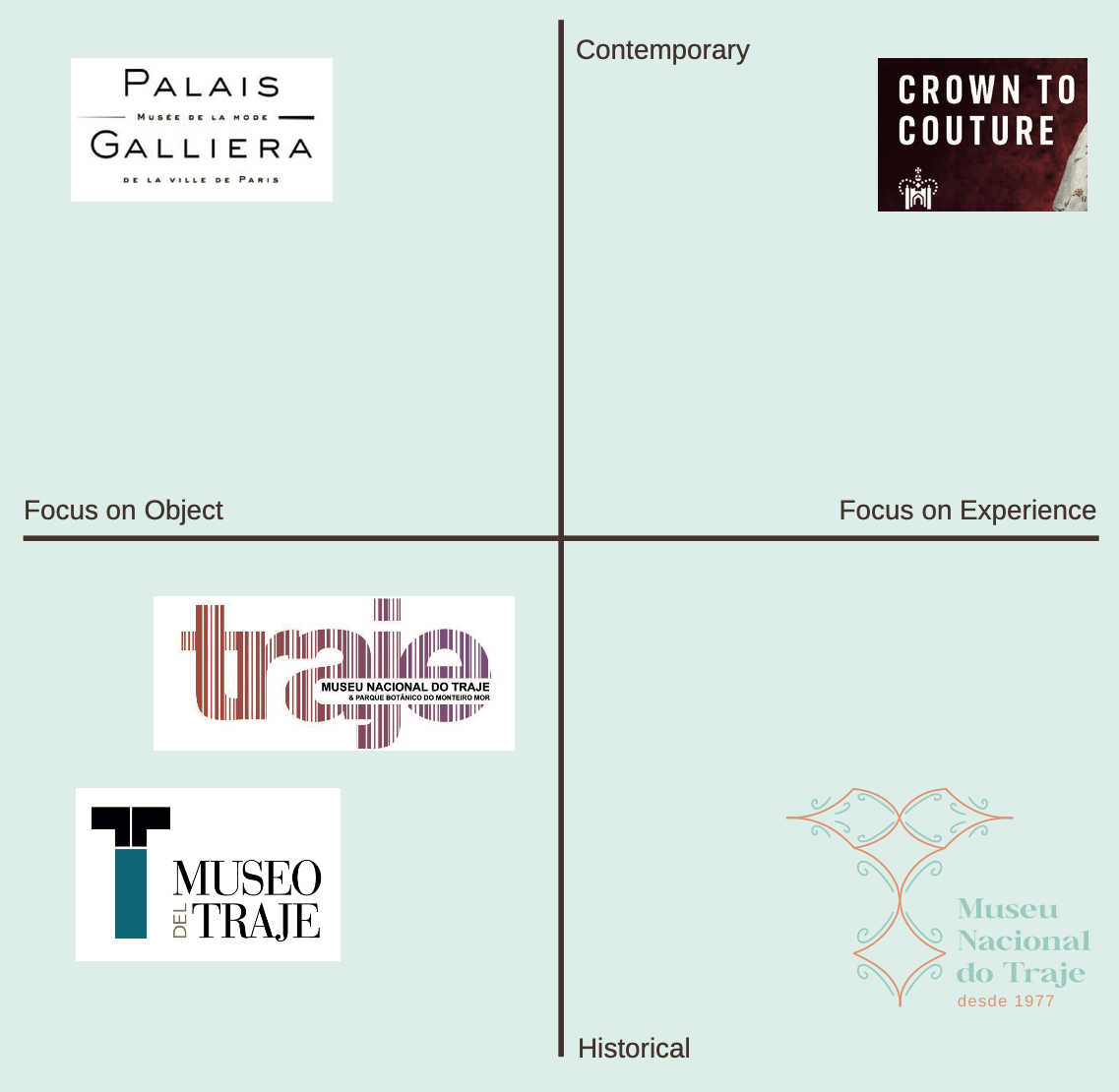
A strategic comparative study analyzed international institutions (such as Museo del Traje in Madrid, Palais Galliera in Paris, and Kensington Palace's "Crown to Couture"). This benchmark highlighted the need to move the MNT from a purely object-centered archive into an immersive, experience-driven destination that bridges historical attire with contemporary creators.
02. Concept: The Four Brand Pillars
The brand is built on four core pillars: The Past (reimagining archival collections), The Present (a contemporary platform for emerging designers), The Garden (embracing the 11-hectare Monteiro-Mor botanical microclimate), and The Living Web (interweaving architecture, body anatomy, and social history into a single narrative).
03. Logo Geometry & Window Grid
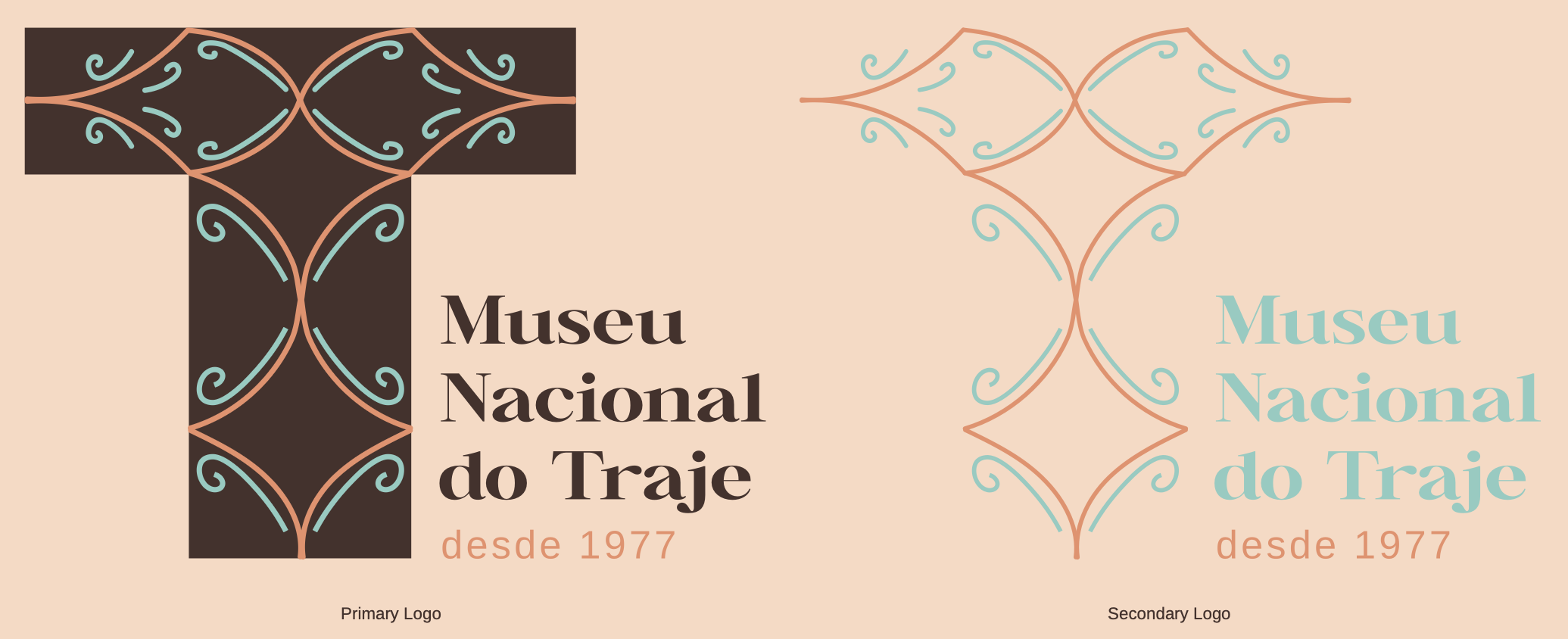
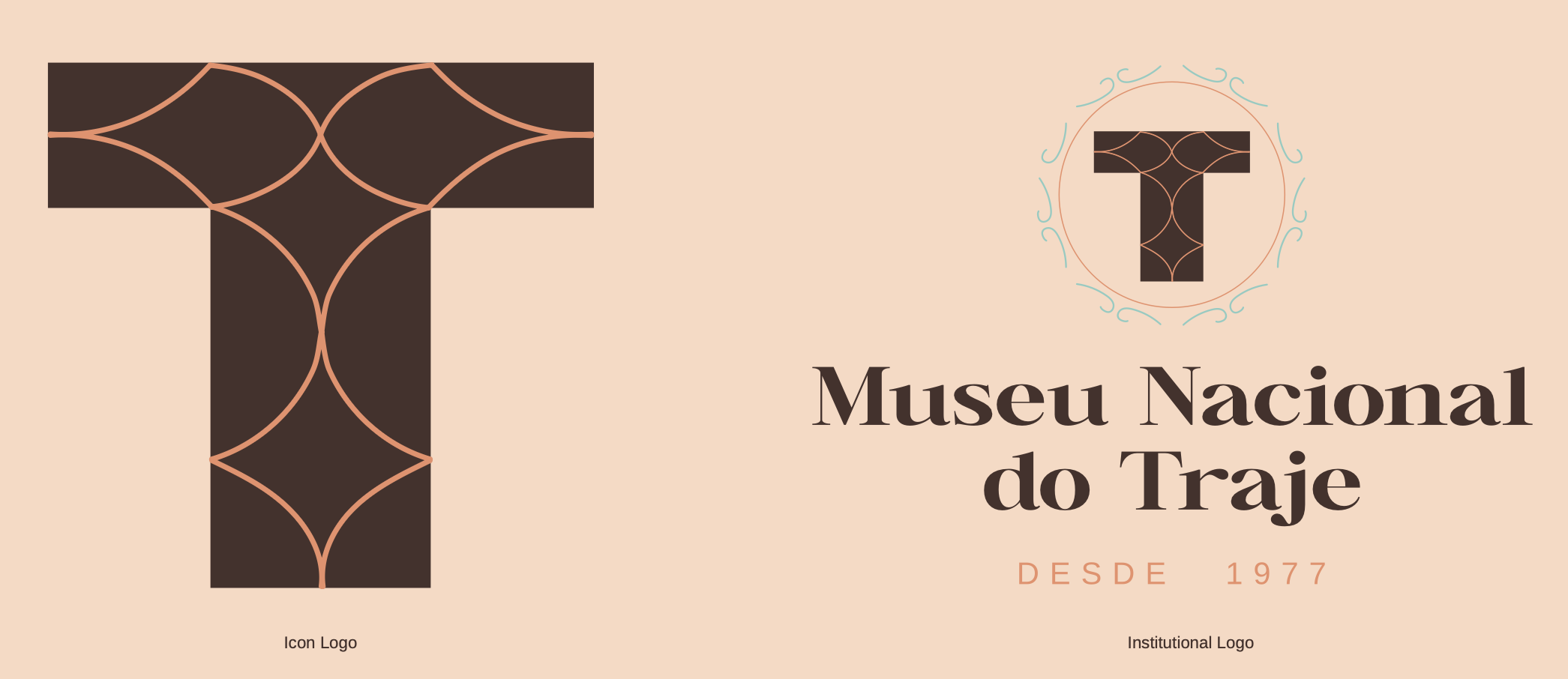
The core monogram 'T' draws directly from the neoclassical window frames of the Angeja-Palmela Palace and traditional Portuguese filigree embroidery. Its modular geometry and defined safe area ("t") guarantee perfect visual harmony across institutional seals, digital assets, and physical wayfinding signs.
04. Chromatic Harmony & Typography
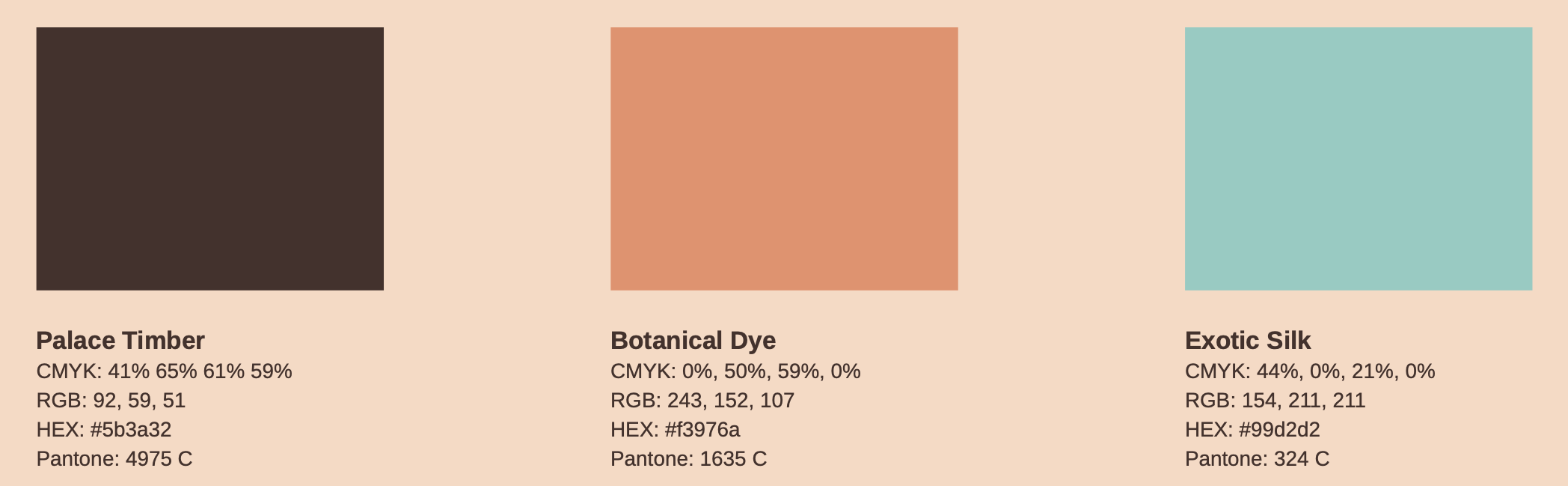
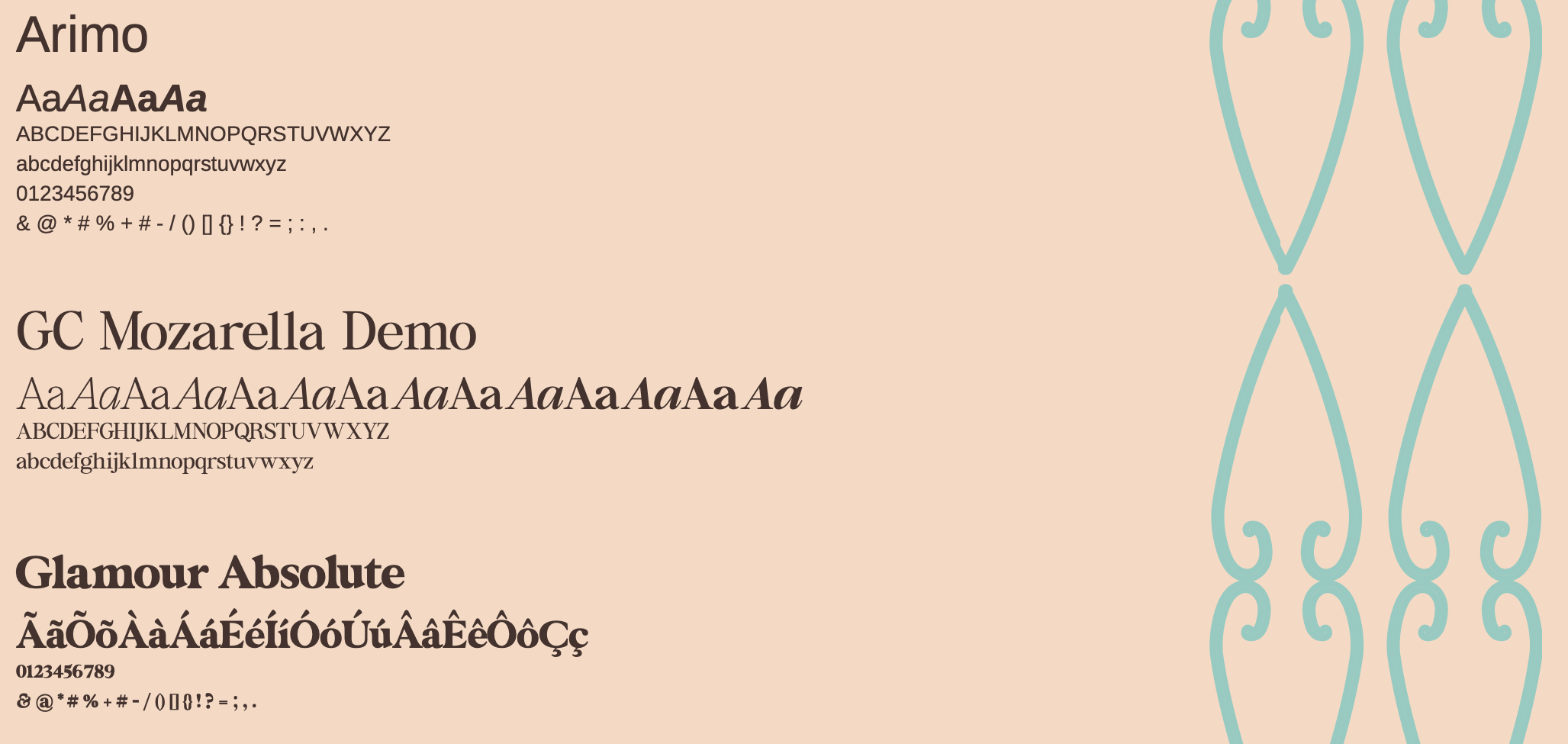
The palette pairs architectural gravitas with textile pigments: Palace Timber (#5B3A32), Botanical Dye (#F3976A), and Exotic Silk (#99D2D2). The typographic system combines the refined classical curves of Glamour Absolute and GC Mozarella Demo with the structural clarity of Arimo for modern editorial balance.
05. Brand Applications & Wayfinding
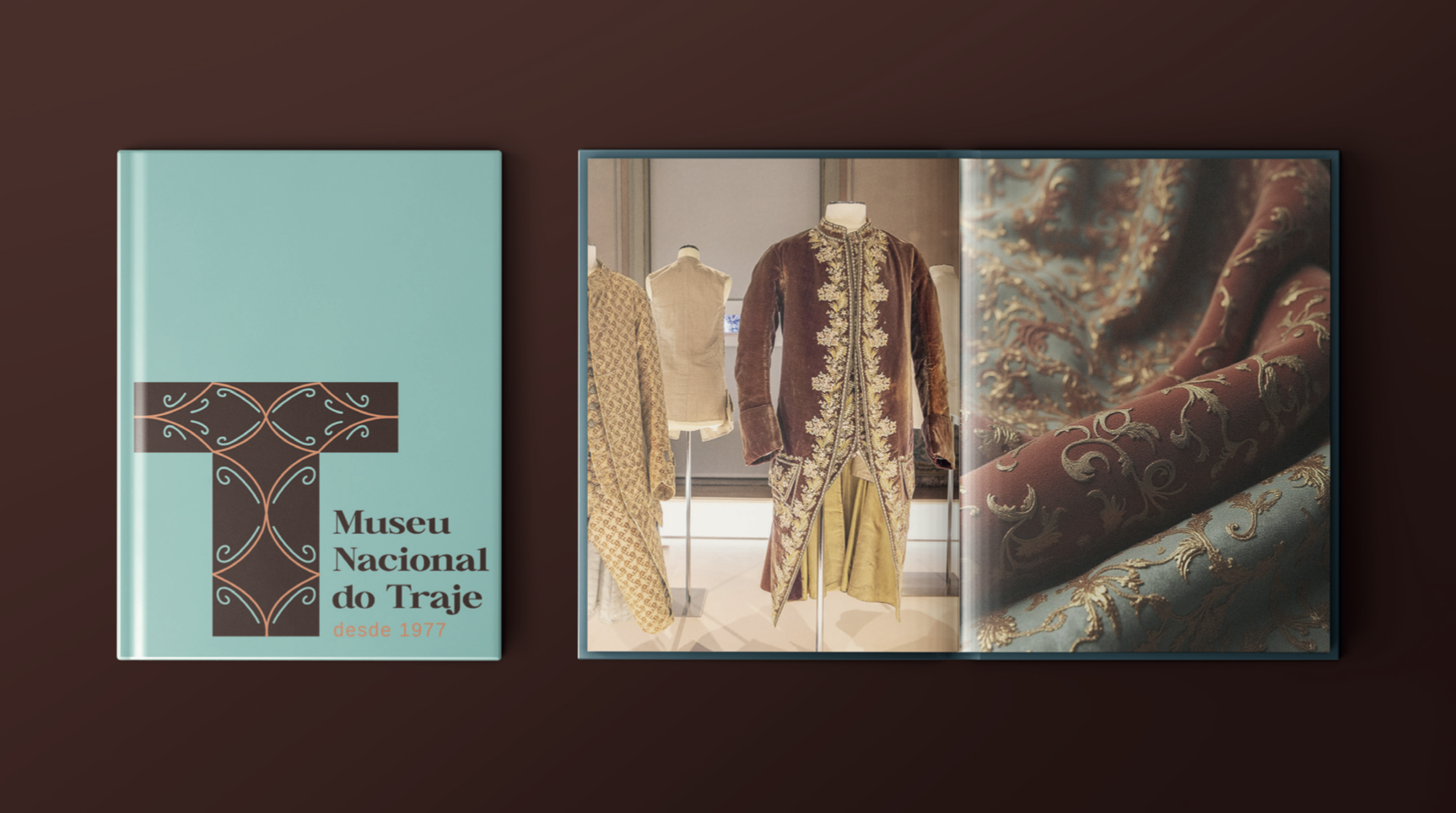
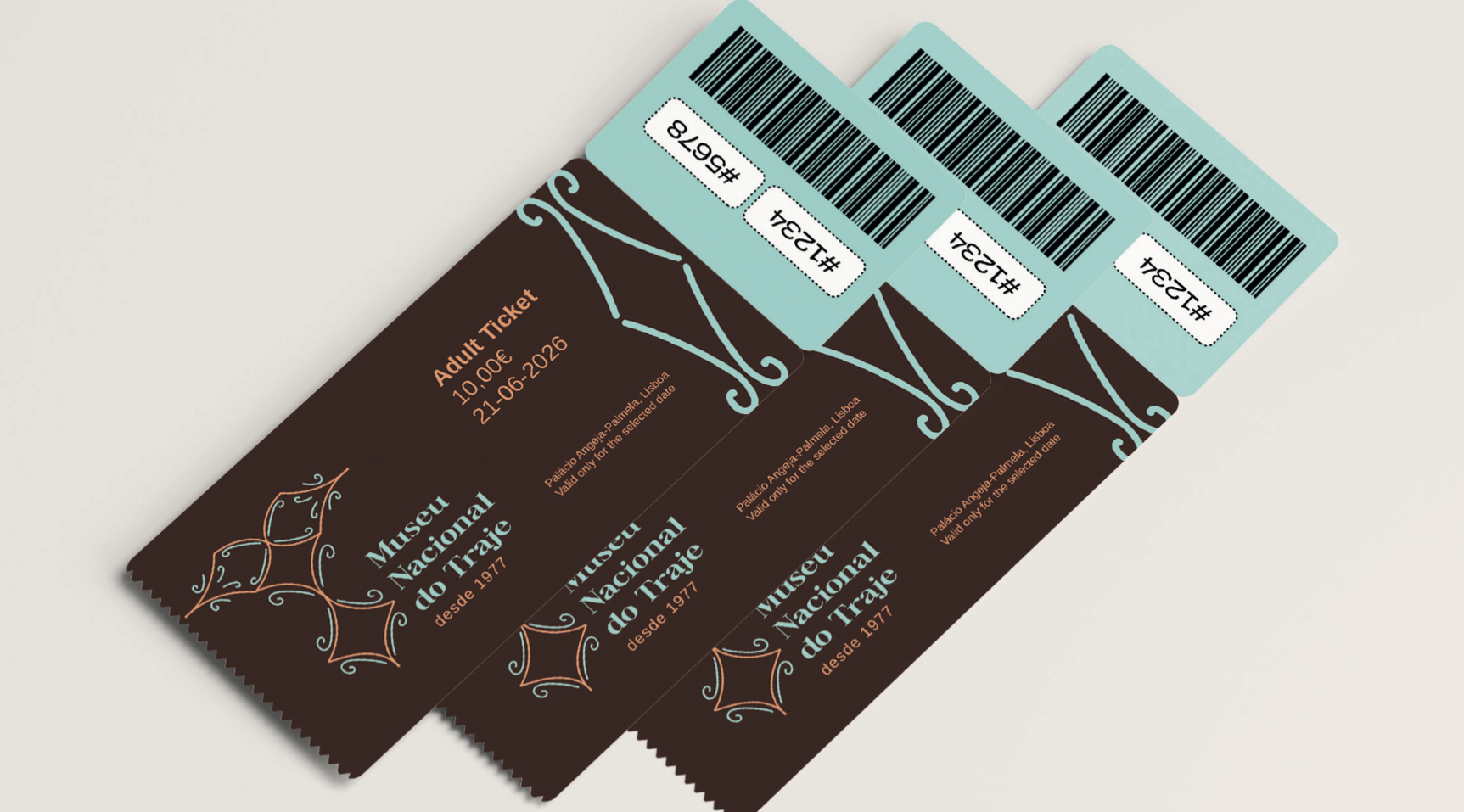
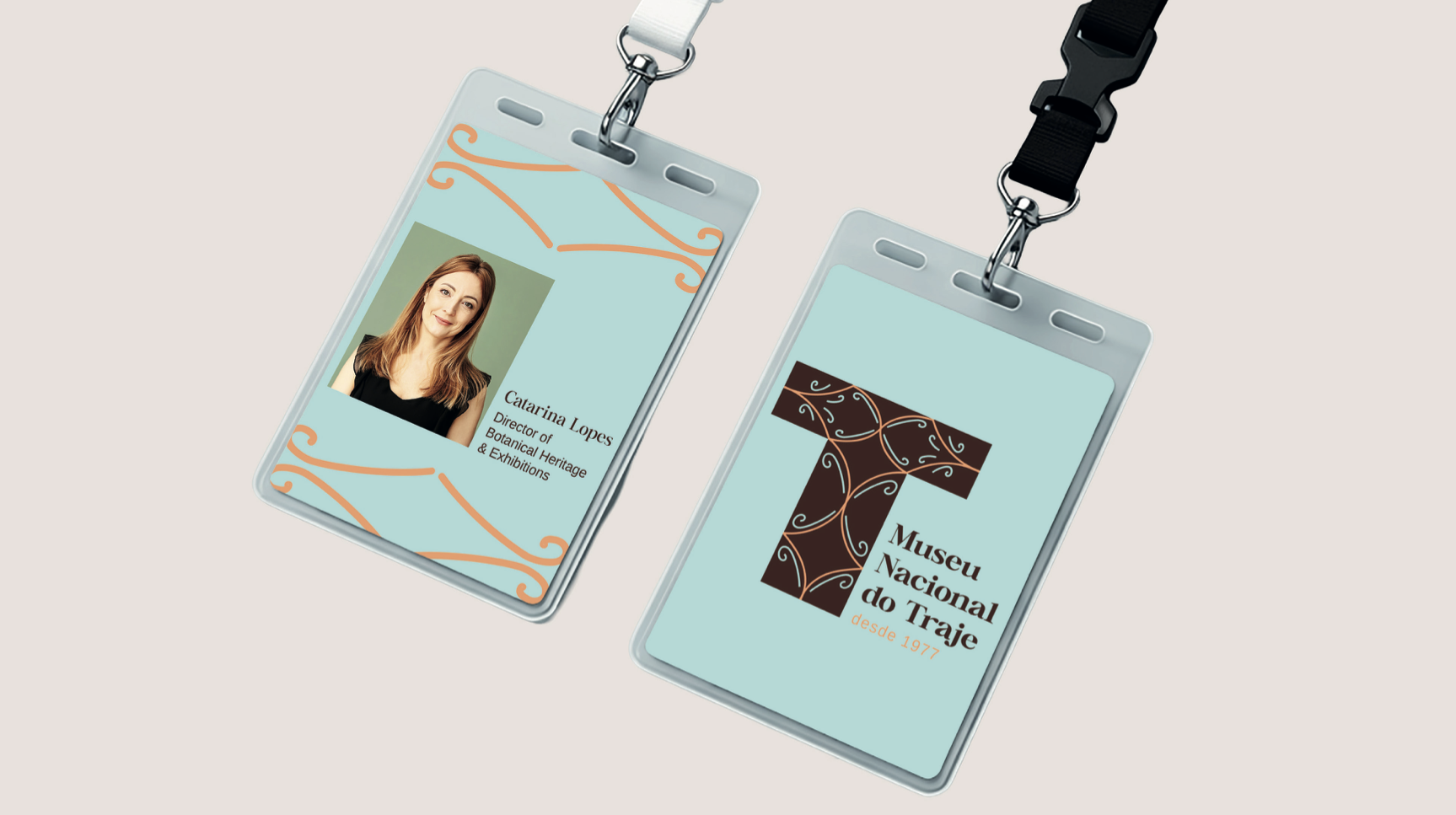
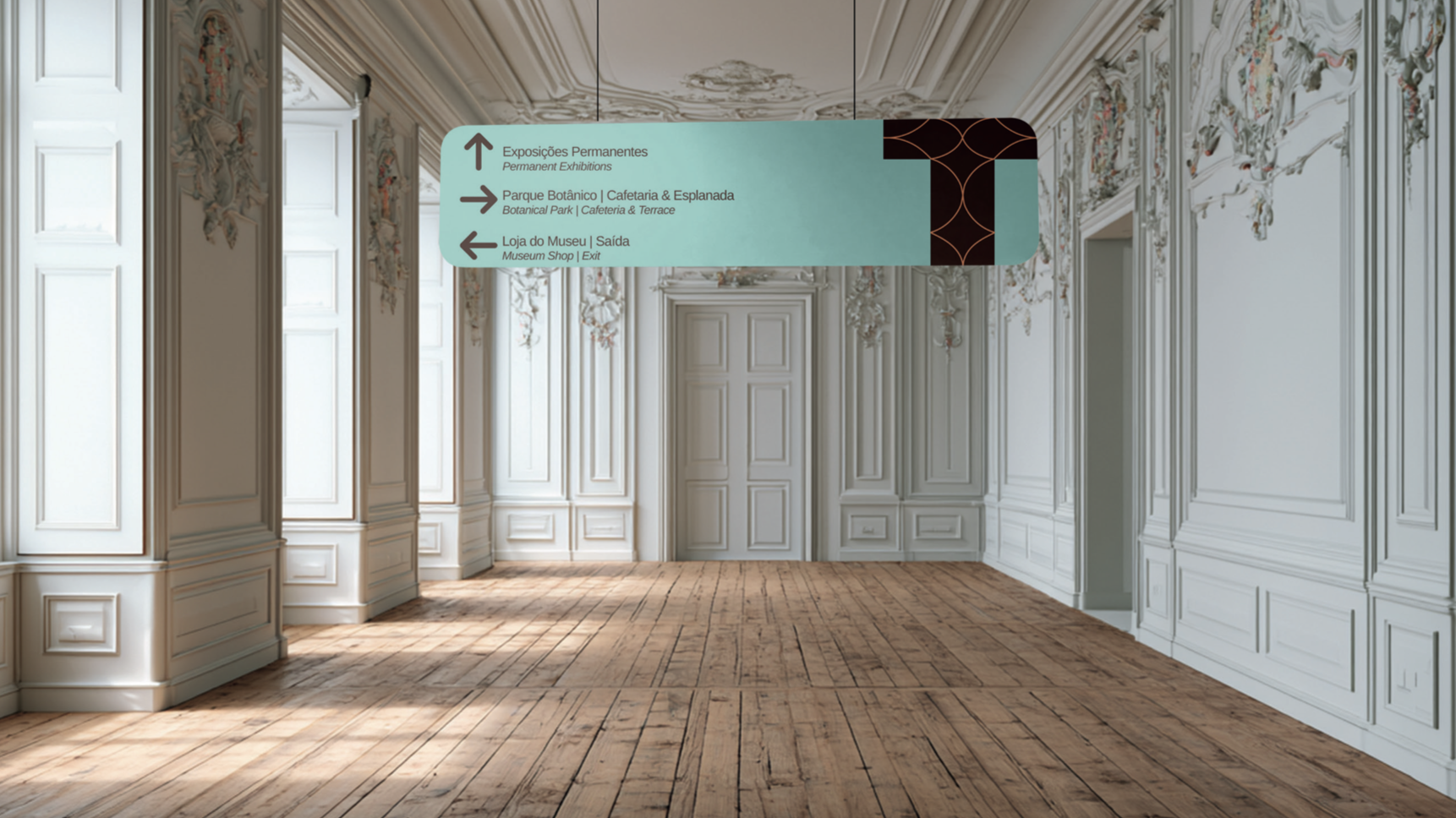
The identity translates seamlessly across editorial catalog layouts, museum ticketing, digital interfaces, tote bags, staff credentials, and spatial wayfinding signage designed to respect the historic palace interior while guiding visitors through both the galleries and botanical grounds.